
.png)


BM Amla urges continued unity among iKalingas as province joins nation in celebrating Independence Day
Tabuk City, Kalinga – As the province joins the nation in commemorating the 128th Independence Day on June 12, Kalinga Board Member Julius “Glenn” Amla called on fellow iKalingas to draw inspiration from the sacrifices of the country's heroes and continue working together to promote unity, peace, and progress. In a message posted on his official Facebook page, Amla paid tribute to the courage, sacrifice, and unity of Filipinos who fought for the country's freedom, many of w

Mark Moises Calayan
21 hours ago2 min read


Passenger dies after truck’s brake fails and slams into barrier in Baguio
Baguio City, Philippines – One of the occupants of a truck that crashed into a concrete barrier along Km. 3 Asin Road in Baguio City on June 10 died several hours after being rushed to the hospital. Police confirmed the fatality to the Bombo Radyo Baguio News Team, saying the victim was pronounced dead at around 9:14 a.m., approximately two hours after the accident occurred at about 6:55 a.m. The victim was among the three individuals on board a wing van truck carrying approx
Mark Moises Calayan
23 hours ago1 min read


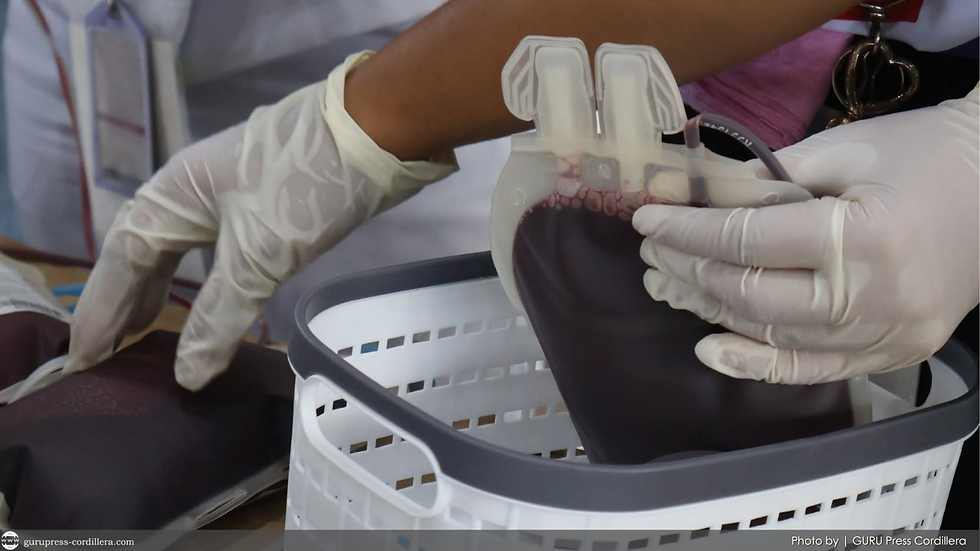
More than 2,000 blood units collected in the province, boosting life-saving healthcare efforts - Kalinga Prov’l Health Board
Tabuk City, Kalinga — More than 2,000 units of blood were collected across Kalinga from January to May 2026 through the combined efforts of local government units, private hospitals, the Philippine Red Cross, and voluntary blood donors, according to reports presented during the Provincial Blood Council’s first-semester meeting on June 10 at Davidson Hotel in Bulanao. Among the reported collections, Tabuk City recorded the highest number with 1,025 blood units, followed by the

Mark Jordan Bomogao
23 hours ago1 min read


One click to Kalinga: Province adopts student-built tourism app ‘ALAPUAP’
Tabuk City, Kalinga – What started as a student innovation has now become Kalinga’s official digital tourism guide, marking a significant step toward making the province’s tourism information more accessible, organized, and technology-driven. More than three months after it was first presented to the Provincial Government of Kalinga, the student-developed tourism application “ALAPUAP” has officially been adopted by the province following the signing of a Memorandum of Agreeme
Mark Moises Calayan
23 hours ago3 min read


Trike driver plunges 200 meters into ravine in Bontoc, lives to tell the tale
Bontoc, Mountain Province – A trike driver survived a harrowing 200-meter fall into a ravine in Bayyo, Bontoc, on the morning of June 10, 2026, thanks to the swift response of rescuers. According to the Bontoc Municipal Police Station, authorities and civilian responders were dispatched to Sitio Ambatek at around 10:15 a.m. after receiving reports that a motorist had plunged into a ravine beside the road. Through a coordinated rescue operation, responders successfully retriev

Leonora Lo-oy
23 hours ago1 min read


DUTY OVER BLOOD: Daughter turns in father to police, returns P350K snatched from woman in Benguet
La Trinidad, Benguet – A 19-year-old woman chose to do what was right over protecting her father after she returned P350,000 that he had allegedly snatched from a woman in La Trinidad, Benguet. According to PMaj. Avelmar Renan Garambas, Deputy Chief of Police of the La Trinidad Municipal Police Station, the young woman learned about her father's involvement in the incident through social media reports regarding the theft that occurred along KM5, La Trinidad, on June 8. Having
Leonora Lo-oy
23 hours ago1 min read


Balbalan moves to institutionalize Athlete Incentives, promote Sporting Excellence through local ordinance
Tabuk City, Kalinga – A proposed ordinance that seeks to institutionalize incentives and awards for athletes who bring pride and honor to the Municipality of Balbalan is now under review by the Sangguniang Panlalawigan (SP) of Kalinga. Passed by the Sangguniang Bayan of Balbalan, the measure aims to formally establish the municipality’s Athletic Excellence Awards Program, providing updated cash incentives to athletes who represent Balbalan in provincial, regional, national, a
Mark Moises Calayan
23 hours ago2 min read


A Lab closer to Home: Tanudan’s first clinical laboratory brings faster, more accessible healthcare to residents
FEATURE For years, many residents of Tanudan had to travel outside the municipality for laboratory tests, spending additional time, money, and effort just to access essential diagnostic services. Today, that burden is easing with the opening of the municipality’s first Department of Health (DOH)-accredited clinical laboratory. Located at the Rural Health Unit (RHU), the newly established facility now provides iTanudans with fast, accurate, and accessible diagnostic testing cl
Leonora Lo-oy
23 hours ago2 min read


“Saan yo kuma baybya-an ti ili tayo” — BM Kitongan urges iTulgao youth to preserve heritage, give back to homeland
Tulgao, Tinglayan – Recognizing the growing number of successful young professionals from Tulgao, Sangguniang Panlalawigan Board Member Emilio Kitongan called on the younger generation of iTulgaos to remain connected to their roots and contribute to the continued development of their community, emphasizing that progress should go hand in hand with the preservation of their culture and identity. Speaking during the First Grand Reunion of Tulgao East and Tulgao West and the 39t

Lorraine Bacullo
23 hours ago2 min read


“Abal-abal”hunter found dead in Abra River after 3-day search
Langiden, Abra — The body of a 56-year-old man who went missing while gathering June beetles, locally known as abal-abal, was found floating along the bank of the Abra River in Sitio Cauggan, Barangay Mabungtot, Langiden on June 8, ending a three-day search conducted by his relatives and local authorities. The victim was identified as Juder “Pute” Pemado of Zone 4, Bangued, Abra. He was reported missing on the evening of June 5 after failing to return home, prompting family m
Lorraine Bacullo
24 hours ago1 min read


More than Whang-Od: Top Philippine tour operator eyes wider promotion of Tinglayan’s hidden wonders
FEATURE “I want people to know that there is more beyond the tattoos.” — Jeneffer Palacsa-Baltazar Tinglayan, Kalinga — For years, the name Tinglayan has been synonymous with one person—Apo Whang-Od, the world-renowned traditional tattoo artist whose village of Buscalan has attracted visitors from across the globe. But beyond the century-old tattoos lies a municipality filled with towering mountains, breathtaking waterfalls, steaming hot springs, ancient rice terraces, and li
Lorraine Bacullo
2 days ago4 min read


Back to School: Over 267,000 learners return to class in Cordillera
Baguio City, Philippines – More than 267,000 learners have returned to school across the Cordillera Administrative Region as classes officially opened for School Year 2026–2027, according to data released by the Department of Education-Cordillera (DepEd-CAR) on June 9. Based on the Learner Information System (LIS) Quick Count, a total of 267,538 learners have been enrolled in the region as of reporting time. Elementary learners accounted for the largest share of enrollees at
Mark Jordan Bomogao
2 days ago2 min read


22-yr-old man drowns after bridge jump in Ilagan, Isabela
Ilagan City, Isabela – A 22-year-old man died after drowning in the Pinacanauan River in Barangay Baculud, Ilagan City, Isabela, on Tuesday, June 9. Police identified the victim as Andrei Dayrit, a native of San Fernando, Pampanga, who was reportedly residing in Barangay San Vicente, Ilagan City. Based on police reports cited by local media outlets, Dayrit went to Baculud Bridge with two minors at around 2:50 p.m. to swim in the river. Upon reaching the area, he allegedly jum
Mark Moises Calayan
2 days ago1 min read


Rare Philippine Serpent Eagle sighted in Luna, Apayao; MENRO Luna urges public for wildlife protection
‘Haan tayo kuma nga dangdangran dagitoy wildlife tayo ta isu metlang ti pangkitaan tayo nga intact paylang ti wildlife ditoy ili tayo’ – MENRO Designated Daniel Jose M. Viernes Luna, Apayao – A rare Philippine Serpent Eagle was recently sighted in the municipality of Luna on the morning of June 9, prompting local environmental authorities to call for greater public awareness and stronger protection of the province's wildlife resources. In the Cordillera, Philippine Serpent
Lorraine Bacullo
2 days ago2 min read


Brace for ‘Super’ El Niño: PAGASA warns severe dry conditions loom by late 2026
Baguio City, Philippines – A very strong to potentially “super” El Niño is expected to develop by the latter part of 2026 and may persist into early 2027, raising concerns over reduced rainfall, prolonged dry conditions, and their possible impact on agriculture and water resources across the country, including the Cordillera Administrative Region. During the DANUM 2026 Summit on May 29, PAGASA Baguio Senior Weather Specialist Engr. Larry Esperanza said climate models indicate
Lorraine Bacullo
2 days ago2 min read




Comments